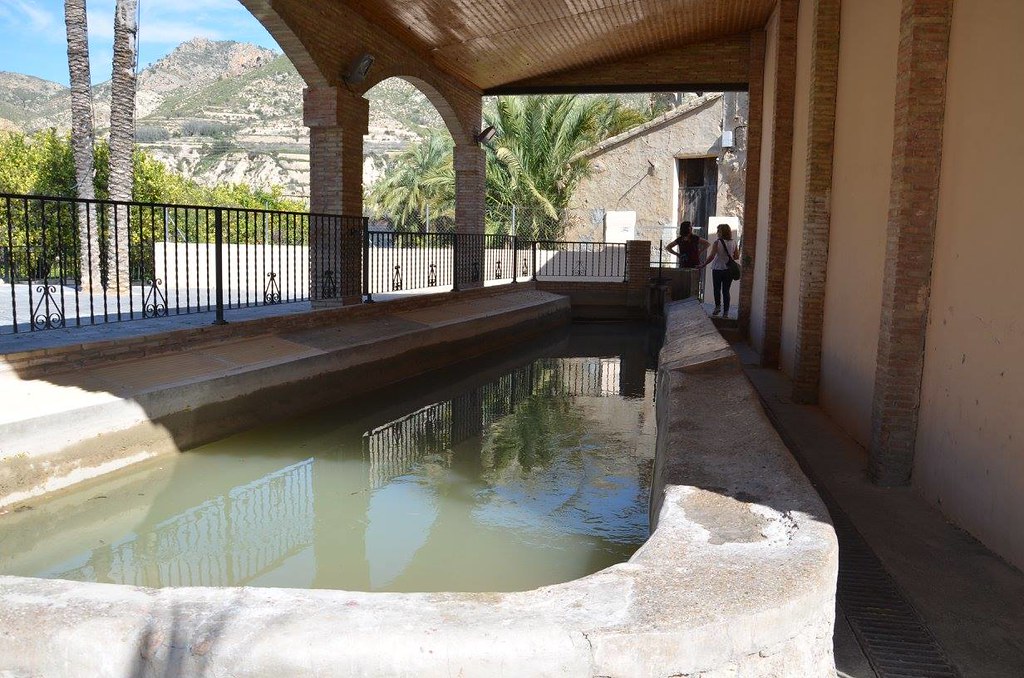
Departure from the place of origin to go to the Ricote Valley, one of the few places where we can still feel the sensitivity of the Arab culture. Its municipalities trace a leafy orchard that meanders along the banks bathed by the safe river and will transport us to an idyllic world. We will make a route to learn about the different types of fruit trees in the area, and in one of the farms we will enjoy a country picnic of typical products of the area such as ciezana cake.

We will take a walk through Cieza, we will visit Paseo Lucas, an authentic open-air museum where the local artist Pepe Lucas captured a small part of his pioneering style in its 32 columns and on its floor. Then we head to the Siyasa Museum, which highlights the Andalusian era thanks to the remains of the city of Siyasa. We will see two full-scale Siyasa houses as well as remains of rock art from the Paleolithic to the Bronze Age.
After Cieza’s visit we will have lunch at a local restaurant where we will try typical dishes from the Valley.
After visiting Cieza, we drive to the Ricote Valley, first to Abarán, which is known for its “norias” (water wheels). Among its cultivation fields there are numerous hydraulic structures for lifting water, many of them closed or abandoned, but many others are still in operation, as in the case of the Norias Grande, Candelón and Hoya de don García. Afterwards we make a stop in the heart of the valley in the ancient city of Ojós, one of the remote villages of the valley, the origins of which are still uncertain. Its traces go back to prehistory, and from 1281 to the 19th century it belonged to the Order of Santiago.
End of our services.